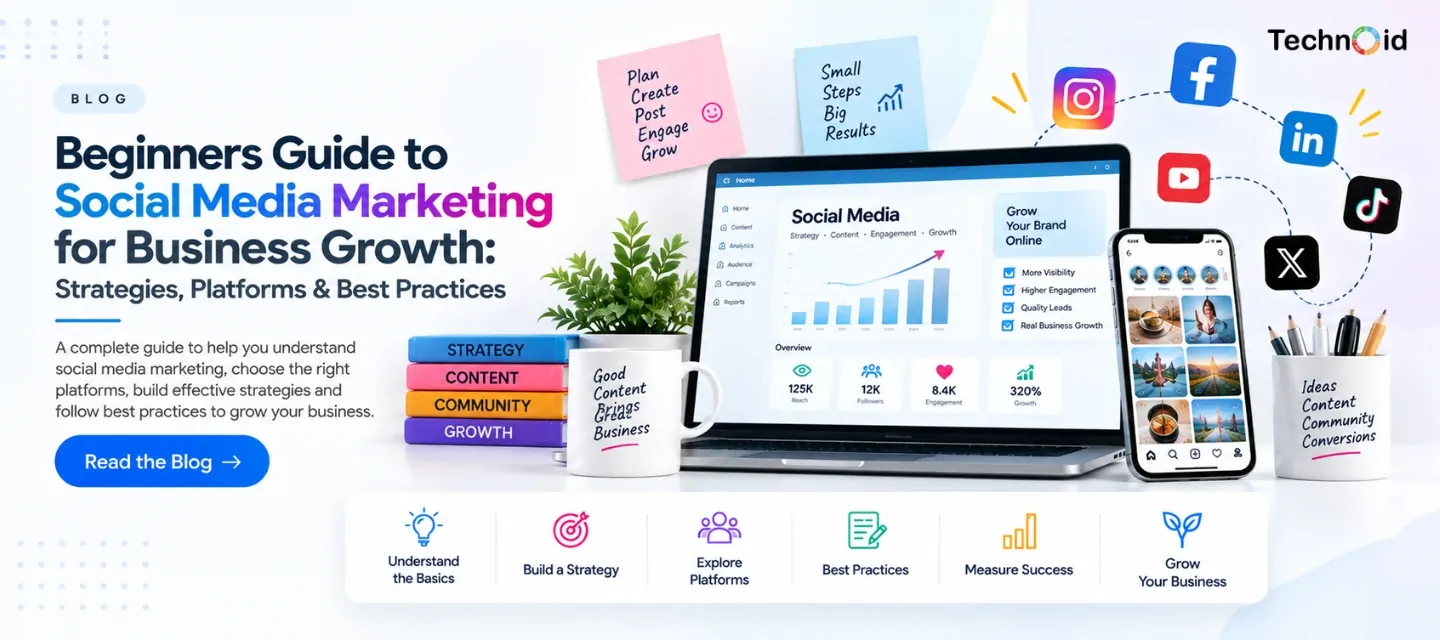
Social media has changed the way businesses connect with customers. From discovering new brands to researching products and communicating with companies, customers increasingly use social platforms throughout their buying journey.
For businesses, this creates an opportunity to build awareness, engage their audience, generate leads, and support sales. But simply creating an account and posting occasionally is not enough.
Successful social media marketing requires a clear strategy, consistent content, the right platforms, and regular performance tracking.
This beginner’s guide covers the basics businesses should understand before building a social media marketing strategy.
Social media marketing is the use of social media platforms to promote a business, communicate with customers, build brand awareness, and support business goals.
Platforms such as Instagram, Facebook, LinkedIn, TikTok, and YouTube provide different ways for businesses to reach their audiences.
Depending on the business, social media can help:
The right approach depends on the business, its audience, industry, and objectives.
Customers often use social media to discover brands, compare products, read reviews, and interact with businesses.
A consistent presence helps businesses stay visible and gives potential customers an opportunity to understand what the brand offers.
Social media can also provide valuable insights. Comments, messages, engagement, and content performance can help businesses understand what their audience finds useful or interesting.
Not every social media post needs to promote a product or service.
Educational content, industry insights, customer stories, behind-the-scenes content, and useful tips can help people become familiar with a brand.
Over time, consistent communication can improve brand recognition and help establish trust with potential customers.
Businesses do not necessarily need to be active on every platform. The better approach is to focus on the channels where their target audience is most likely to spend time.
Instagram works particularly well for visually driven industries such as fashion, beauty, food, hospitality, retail, and lifestyle. Reels, Stories, carousels, and product content can help brands showcase their offerings.
Facebook can help businesses reach broad audiences, build communities, share updates, promote offers, and run targeted advertising campaigns.
LinkedIn is valuable for B2B businesses, professional services, corporate brands, and companies focused on thought leadership. Businesses can share expertise, industry insights, company news, and professional content.
TikTok focuses heavily on short-form video and can help brands reach audiences through educational, entertaining, and creative content.
YouTube is useful for tutorials, product demonstrations, interviews, educational videos, and longer-form brand content.
The most important consideration is not how many platforms you use, but whether you are using the right platforms for your audience.
Posting without a strategy can quickly become repetitive and difficult to manage.
A social media strategy should define what the business wants to achieve, who it wants to reach, what it wants to communicate, and how performance will be measured.
Your strategy should cover:
Content pillars help businesses maintain variety while keeping their communication focused.
For example, a professional services company could build content around:
These pillars make content planning easier and help prevent repetitive posts.
Consistency helps businesses remain visible and recognisable.
This does not mean posting several times a day. A realistic schedule that a business can maintain over the long term is more useful than posting heavily for a few weeks and then becoming inactive.
Consistency should also extend to branding, messaging, visual identity, and tone of voice.
A social media strategy should be based on more than likes and followers.
Businesses should track metrics that relate to their actual objectives.
Important metrics include:
The most useful metrics depend on the campaign goal. A brand awareness campaign may focus on reach and impressions, while a lead-generation campaign should focus more on leads and cost per lead.
Businesses new to social media often make a few avoidable mistakes.
These include:
Avoiding these mistakes can help businesses build a more sustainable social media presence.
When Should You Work with a Social Media Marketing Agency?
Managing social media involves much more than publishing posts. Strategy, content planning, creative development, community management, advertising, and performance analysis all require time and expertise.
Businesses that do not have the resources to manage these areas internally may benefit from professional social media marketing services in Dubai..
An experienced agency can help develop a strategy, plan content, manage campaigns, monitor performance, and make improvements based on results.
Build a Social Media Strategy That Supports Growth
Social media marketing is not simply about gaining followers. The real goal is to connect with the right audience and use those relationships to support wider business objectives.
Start by understanding your customers, choosing the platforms that make sense for your business, creating valuable content, maintaining consistency, and measuring performance.
As your strategy develops, use performance data to understand what works and where improvements are needed.
Whether you manage social media internally or use professional social media marketing services in Dubai, a clear and consistent strategy can turn social media into a valuable part of your overall marketing efforts.
Social media marketing involves using platforms such as Instagram, Facebook, LinkedIn, TikTok, and YouTube to promote a business, communicate with customers, build awareness, and support business objectives.
There is no single platform that works best for every business. The right choice depends on your target audience, industry, content format, and business goals. Focus on the platforms where your potential customers are most active.
There is no universal posting frequency. Businesses should choose a schedule they can maintain consistently while ensuring their content remains useful, relevant, and aligned with their strategy.
Yes. Businesses can generate leads through organic content, paid advertising, direct messages, lead forms, website traffic, and clear calls to action. Results depend on factors such as targeting, content quality, the offer, and campaign strategy.
A professional agency can assist with social media strategy, content planning, creative development, advertising, community management, and performance tracking. This can help businesses maintain a consistent presence while focusing on their core operations.

An Introduction to Shopify Metafields in E-Commerce website development Customization and flexi ..
You invested in a SharePoint intranet. The platform is live, the pages are built, documents are ..

Microsoft SharePoint can help businesses manage documents, improve collaboration and give emplo ..
[calendly url=”https://calendly.com/technoidfze/30min” type=”1″]
Enjoy our content? Add us as a preferred source on Google.